
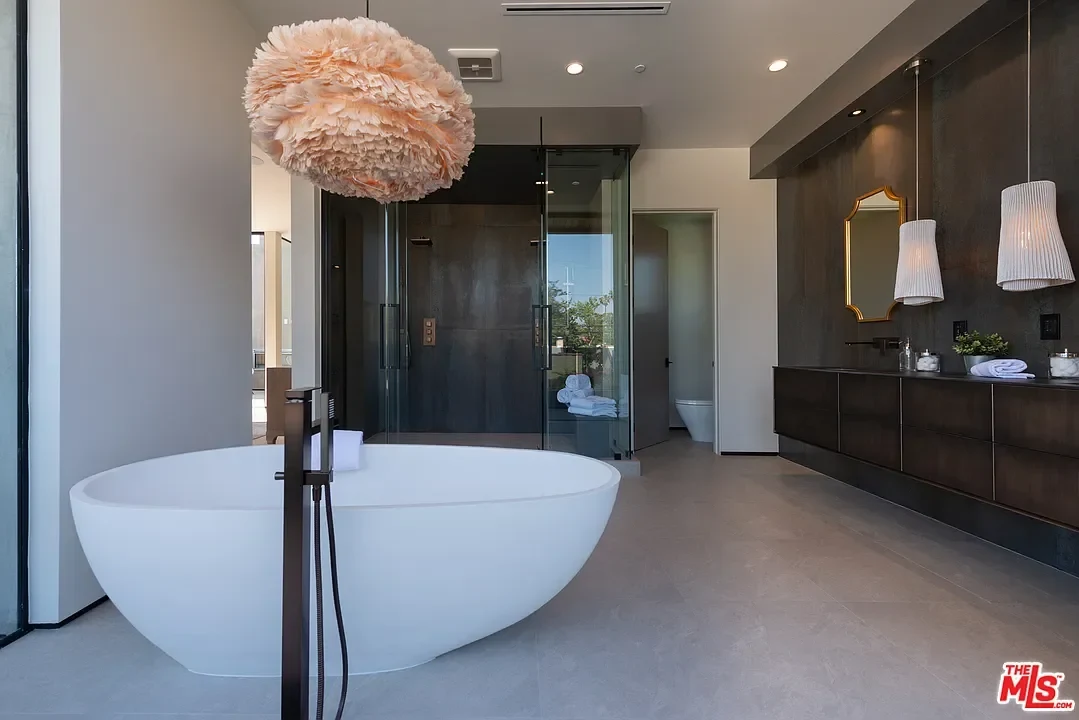
Light is part of the material palette
Natural stone and wood do not have one fixed appearance. Veining, grain, texture, and sheen change with the direction and quality of light. A slab that feels soft and layered near a window can look flat under a single ceiling fixture; a warm wood finish can appear dull or overly red when the light source is poorly chosen.
For that reason, we treat lighting as part of the finish selection rather than a separate decorative package. The goal is not to make every surface brighter. It is to reveal the character that made the material worth choosing while preserving shadow, contrast, and visual rest.
Color temperature is only the beginning
Correlated color temperature describes whether a white light appears warmer or cooler, but it does not fully describe how accurately materials will appear. The U.S. Department of Energy distinguishes the color appearance of the light from color fidelity—the way that source affects the appearance of illuminated objects. DOE also notes that CRI is useful but incomplete, while the newer TM-30 method provides several measures and graphics for evaluating color rendition.
For a residence, that means two lamps labeled with the same color temperature can still make the same stone or wood look different. Review the actual fixture, LED module, or lamp specification rather than choosing by Kelvin alone. High-quality color rendition is especially important where subtle beige stone, warm white oak, bronze, plaster, and textiles must relate without unexpected shifts.
Choose direction before brightness
The position of a light source determines what it reveals. Light aimed across a textured stone can emphasize relief and shadow; broad frontal light tends to reduce that texture. Wood grain may become richer with soft directional light, while glare on a glossy surface can obscure the material beneath it. These are design effects, not universal rules, so the correct approach depends on the finish and the mood of the room.
A small evening mockup is more useful than relying only on a reflected ceiling plan. Set the stone and wood samples in their intended orientation, then view them under the proposed downlight, wall light, or concealed linear source. Check the result from the normal path through the space, not only from directly in front of the sample.
Layer the room so it can become quiet
We prefer separate layers for general illumination, task lighting, and material emphasis. A kitchen may need strong working light at the counter but much less light across the room after dinner. A bathroom needs clear light at the mirror while still allowing the stone and wood to feel calm at night. Independent control lets the room change without requiring a ceiling crowded with fixtures.
Dimming performance must be coordinated, not assumed. Lutron’s technical guidance emphasizes compatibility between LED sources and controls because products labeled dimmable do not necessarily perform well with every dimmer. The fixture, driver, control type, and desired low-end level should be reviewed together, and a sample circuit is worthwhile on a project with many repeated fixtures.
Coordinate lighting before the finishes are fixed
Lighting affects millwork, stone fabrication, ceilings, electrical rough-in, and access for future service. Concealed channels need space and ventilation; decorative fixtures need support and accurate centering; wall lights must align with mirrors, faucets, and cabinet divisions. These relationships belong on coordinated elevations before framing and fabrication are complete.
The Natural Stone Institute’s stone-selection guidance includes finish definitions, samples, and mockups—useful reminders that appearance should be evaluated in context. Our preference is to approve the material palette twice: once in natural light and once under the specified evening scene. When both are resolved, the home does not lose its character after sunset. The stone keeps its depth, the wood keeps its warmth, and the lighting quietly supports them.
Carmel Designs · South Florida
Tell us about your project ↗